
A Free Training Priorities Checklist for Program Managers
Training is only effective if it keeps pace with your program, your staff, and the realities of the work.
As programs grow, funding changes, and staff roles evolve, training can quietly fall out of alignment. Content becomes outdated, expectations drift, and staff receive mixed messages about priorities.
This short checklist is designed to help program managers and coordinators step back and assess whether their current training approach still supports their goals — or whether it’s time to adjust.
Training Priorities Checklist for Program Managers
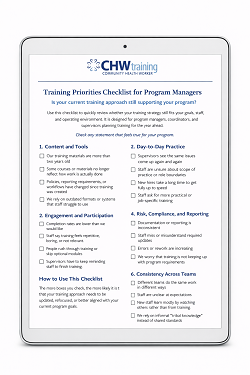
What This Checklist Helps You Do
This practical, research-informed checklist can be completed in about 10 minutes and helps you:
✔️ Identify common signs that training may be out of date or misaligned
✔️ Clarify which training needs are foundational vs. which can wait
✔️ Think through where inconsistency or confusion may be showing up
✔️ Decide what to prioritize this year without overloading staff
Why This Matters for Programs
When training drifts out of alignment, programs often see:
- Inconsistent practices across staff or sites
- Supervisors spending time correcting the same issues
- New staff taking longer to get up to speed
- Increased stress or burnout
- Missed opportunities to reinforce shared expectations
Programs that periodically review and adjust training priorities are better positioned to support staff, maintain consistency, and respond to change without starting over.
Who This Is For
This checklist is useful for:
- Program managers and coordinators
- Supervisors and team leads
- Directors planning annual priorities
- Organizations supporting community-facing, outreach, or care-coordination staff
It works across roles and settings, including community health, maternal and child health, home visiting, outreach, and related public-serving programs.