
⭐ Featured Resource: This guide is included in the Building and Sustaining CHW/P/R Programs in California resource center, developed by the Center for Health Care Strategies in partnership with the California Health Care Foundation.
Why Frontline Supervision Is a Distinct Role
Community health, behavioral health, housing navigation, and social services programs often grow faster than their supervision structures.
As programs expand, experienced frontline workers are frequently promoted into supervisor roles. They bring deep community knowledge, strong relationships, and a clear understanding of the work. These strengths matter, but they are not the same as the skills needed to supervise others.
Supervising a frontline team is a distinct role. It requires supporting multiple staff members, translating program goals into daily practice, and balancing accountability with trust and care. When supervisors are not prepared for these responsibilities, programs may see inconsistent guidance, burnout, or confusion about expectations.
This guide is designed for program managers, coordinators, and organizational leaders responsible for supporting frontline supervisors, whether they oversee community health workers, case managers, peer support specialists, housing navigators, or similar roles. It outlines what makes frontline supervision different, why it matters for program success, and how organizations can think about training and supporting supervisors over time.
Learning More About CHW Supervisor and Leadership Training Options
Supporting CHW supervisors is an ongoing process, not a one-time task. As programs change, supervisors need space to build skills, reflect on challenges, and stay aligned with both CHW Core Competencies and organizational goals.
Many organizations explore structured supervisor or leadership training designed for frontline health and human services teams as one way to support this work. These approaches can help supervisors strengthen communication, provide consistent guidance, and feel more confident in their role while supporting program stability and staff retention.
Learning more about CHW supervisor and leadership training options can be a helpful next step for programs looking to strengthen supervision in a thoughtful, sustainable way.
How Supervising Frontline Staff Differs from Doing Frontline Work
Frontline work, whether in community health, behavioral health, housing, or social services, focuses on direct service, relationship-building, and client engagement. Supervisory work shifts the focus from individual clients to teams, systems, and consistency.
CHW supervisors are responsible for:
- Supporting multiple staff members, not just individual cases
- Translating program goals into day-to-day expectations
- Reinforcing scope of practice and program standards
- Coaching and guiding staff, rather than stepping in to do the work
- Balancing accountability with trust and support
This shift can be challenging, especially for supervisors who were promoted because of their strength as CHWs. Skills that make someone an effective frontline worker do not automatically translate into supervisory skills. This is true across program types, and it is one of the most common sources of supervisor stress and team instability.
For a deeper look at how the supervisor role differs from frontline work, see Community Health Worker Supervisors: A Look at Their Role, Skills and Training and The Role and Importance of a CHW Supervisor: A Comprehensive Guide. Need to orient other departments to these roles? Use A Practical Guide to Building Community-Based Support Roles in California to build shared language across health, education, and community-based teams.
Why Effective Frontline Supervision Matters for Program Success
Supervision plays a central role in how frontline programs function day to day. When supervision is consistent and supportive, programs tend to see stronger outcomes across teams, regardless of the service area.
Effective supervision helps programs:
- Improve CHW retention and reduce burnout
- Create clear and consistent expectations
- Strengthen communication between staff and leadership
- Catch challenges early before they escalate
- Maintain alignment across sites or teams
When supervisors are expected to “figure it out” on their own, programs often experience uneven guidance, stress, and role confusion. Preparing supervisors for their role helps stabilize the system as a whole.
This connection between supervision and program outcomes is explored further in How to Train and Support Supervisors for Program Success, which looks at supervision from a program-level perspective.
When and How to Train Frontline Supervisors
There is no single right answer to when supervisors should be trained. The right approach depends on program size, structure, and readiness.
In some cases, supervisors benefit from training early so they can help shape onboarding and expectations for CHWs. In other situations, CHWs may need foundational training first, followed by supervisor training that builds on shared language and competencies.
Programs often find success when:
- Supervisor training is planned intentionally, not treated as an add-on
- Training addresses both leadership skills and the specific context of your program type
- Supervisors understand how their role connects to organizational goals and workforce standards
- Training continues beyond initial promotion
For guidance on sequencing and planning, see Is it Better To Train Supervisors or Community Health Workers First? and Practical Outline for CHW Supervisor Training (Build Better Teams Fast).
Core Skills and Supports Frontline Supervisors Need
Supervisors need a combination of leadership skills, relational skills, and organizational support. These areas work together and should not be treated as separate or optional.
Leadership and Communication
Supervisors are responsible for guiding staff, not just managing tasks. This includes:
- Giving clear, constructive feedback
- Coaching rather than fixing problems for staff
- Navigating difficult conversations
- Supporting performance while maintaining trust
Programs looking to strengthen these skills may find it helpful to review Help Your Community Health Worker Supervisor Develop Their Leadership Skills.
Emotional Intelligence and Mental Health Support
Frontline staff in community health, behavioral health, housing, and social services often work in high-stress environments and may experience secondary trauma, heavy caseloads, or community crises.
Effective supervision includes:
- Recognizing signs of stress and burnout
- Supporting staff emotionally while maintaining boundaries
- Encouraging healthy coping and self-care practices
Related resources include The Importance of Emotional Intelligence Training for Community Health Worker Supervisors and 6 Ways Your Supervisors Can Support CHWs’ Mental Health.
Soft Skills That Support Teams
Strong supervision relies on everyday skills that shape how teams function. These include:
- Trust-building
- Problem-solving
- Adaptability
- Clear communication
- Conflict navigation
Additional perspectives on these skills can be found in 13 Superior Soft Skills for Supervisors (With Examples) and 8 Must-Have Soft Skills for Community Health Worker Supervisors (to be linked once published).
Supporting Frontline Supervisors Over Time (Not Just at Promotion)
Supervision is not a one-time responsibility that begins and ends with promotion. Supervisors benefit from ongoing support as programs evolve.
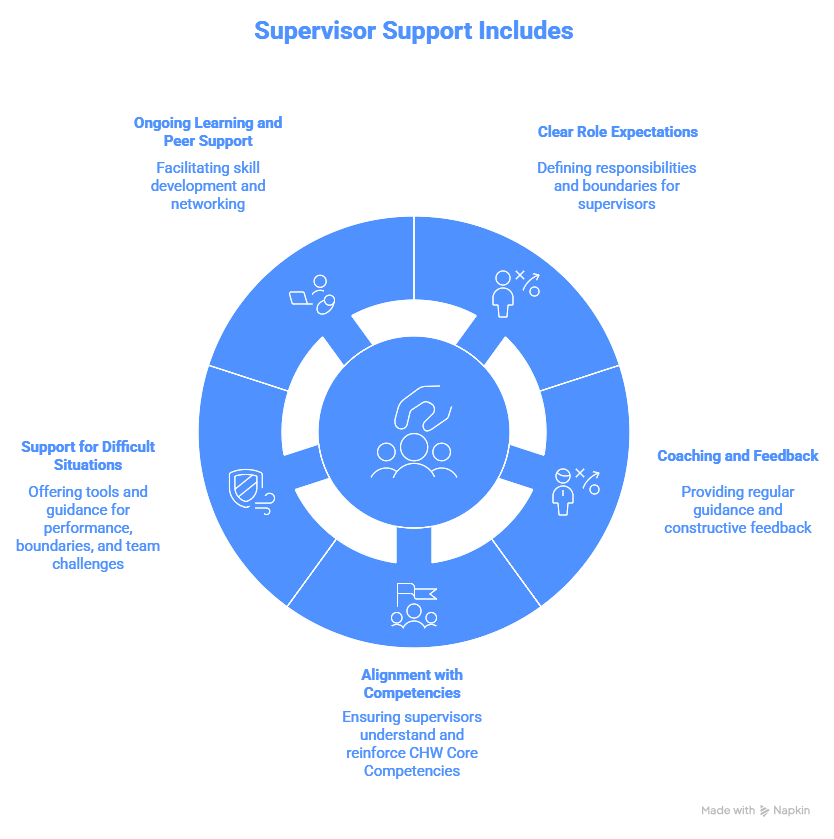
Strong organizations recognize supervision as skilled work and provide:
- Clear role expectations and organizational backing
- Time and structure for supervision activities
- Opportunities for continued learning and reflection
- Support for supervisors’ own wellbeing
For a program-level view of how organizations can support supervisors over time, see How to Train and Support CHW Supervisors for Program Success.
⭐ Featured Resource: This guide is included in the Building and Sustaining CHW/P/R Programs in California resource center, developed by the Center for Health Care Strategies in partnership with the California Health Care Foundation.
Planning Questions for CHW Program Leaders and Managers
Program leaders can use the following questions to reflect on their supervision approach:
- How are supervisors prepared for their role beyond frontline experience?
- What support do supervisors receive after promotion?
- How is supervision aligned with workforce standards, core competencies, and program goals?
- How do we support supervisors’ own wellbeing and workload?
- Who supports supervisors when challenges arise?
Clarifying these questions can help programs strengthen supervision intentionally.