

Program managers responsible for CHW training rarely have extra capacity. Budgets are constrained, staffing changes, and competing priorities make it hard to know where training will make the biggest difference.
This is often when questions about training rise to the surface.
- What training do we actually need this year?
- What can wait?
- Where will training make the biggest difference for staff and the program?
Setting training priorities can help programs stay focused, reduce rework, and make better use of limited time and resources. Research on training needs assessment shows that systematically prioritizing training around organizational goals and constraints improves resource use and relevance.
Ready to build Core Competencies into your training plan?
We work with organizations to implement standardized CHW training that fits your program’s goals, timeline, and budget.
Learn about Core Competencies training →What Program Managers Are Balancing Right Now
At the start of the year, program managers are usually balancing several competing demands.
They may be:
- Translating grant or budget changes into realistic plans
- Preparing for new hires or expected turnover
- Reviewing where staff struggled or felt unsupported last year
- Aligning training with reporting, compliance, or performance goals
Training decisions are rarely made in isolation. They are shaped by staffing levels, supervisor capacity, and the realities of the work.
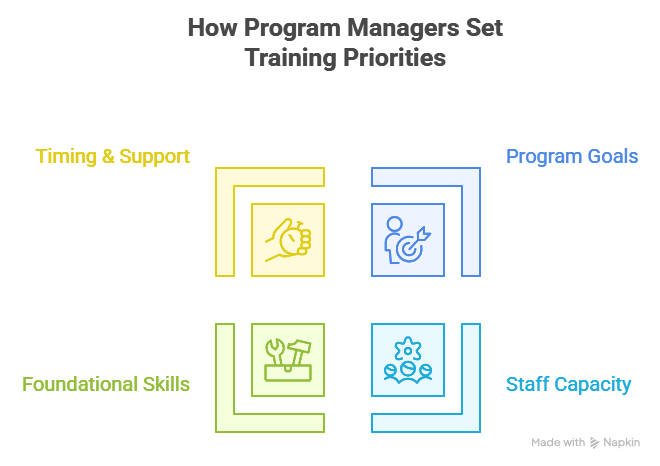
Start With Program Goals, Not Course Lists
A common mistake is starting the year by reviewing a list of available trainings and trying to fit them in.
A more effective approach is to start with program goals.
Ask:
- What does success look like for our program this year?
- What outcomes are we responsible for?
- Where do staff need to be consistent to meet those goals?
When training is tied to clear program priorities, it is easier to decide what is essential and what is optional. Studies on aligning employee development with organizational needs emphasize starting from program or business goals, then identifying the training that supports them.
Identify Where Gaps Are Showing Up
Training priorities often become clearer when managers look at where challenges are already appearing.
Some common signals include:
- Inconsistent practices across staff or sites
- Supervisors spending time correcting the same issues repeatedly
- New staff taking longer than expected to get up to speed
- Staff feeling unsure about scope of practice or expectations
- Increased stress, burnout, or turnover
These are often signs that foundational training or ongoing support needs attention. Training needs analysis frameworks specifically recommend using observable performance issues and inconsistency as signals that targeted training is needed.
Decide What Needs to Be Foundational This Year
Most programs cannot train on everything at once. Early in the year, it helps to identify what needs to be foundational.
Foundational training usually:
- Applies to most or all staff
- Supports consistency and shared expectations
- Reduces confusion and rework later in the year
This might include:
- Core competencies or role expectations
- Documentation or communication standards
- Supervisor support or leadership skills
- Training tied directly to compliance or reporting requirements
Building a strong foundation early can make more specialized or advanced training easier later on.
Why Core Competencies Are Usually the Right Starting Point
For most CHW programs, Core Competencies training is the highest-leverage foundational investment. It creates shared language across roles, supports consistent documentation, and gives supervisors a common framework for coaching.
Organizations that haven’t yet standardized around a Core Competencies framework often find that other training investments. They find that supervisor development, specialization tracks, and refresher cycles are harder to sustain without it. Core comes first because everything else builds on it.
Think About Timing and Capacity
Even the right training can fail if the timing is wrong.
Program managers often need to consider:
- When supervisors have time to support learning
- How training fits alongside onboarding or new initiatives
- Whether training is spaced out or clustered too tightly
Planning training across the year, rather than all at once, can help staff apply what they learn and avoid overload.
Use Training to Support Supervisors, Not Just Staff
Training priorities often focus on frontline staff first. Supervisors, however, play a key role in reinforcing expectations and supporting learning.
At the start of the year, managers may want to ask:
- Are supervisors prepared to coach and guide staff?
- Do supervisors have shared language and tools?
- Who supports supervisors when challenges arise?
When supervisors are supported, training is more likely to stick.
Revisit and Adjust as the Year Goes On
Training plans do not need to be perfect in January.
What matters is having a clear starting point and the flexibility to adjust as conditions change. Staff turnover, new requirements, or shifting priorities may require updates along the way.
Programs that revisit training priorities periodically tend to stay more aligned and responsive.
Moving Forward
Setting training priorities at the start of the year is less about finding the “right” courses and more about making thoughtful decisions.
When training is aligned with program goals, staff needs, and real-world capacity, it becomes a tool for stability rather than another item on the to-do list.
Many organizations use planning guides or structured training frameworks to help think through these decisions and map training across the year. Exploring these kinds of resources can be a helpful next step for program managers who want to plan with intention rather than react as issues arise.
Article updated April 2026.