
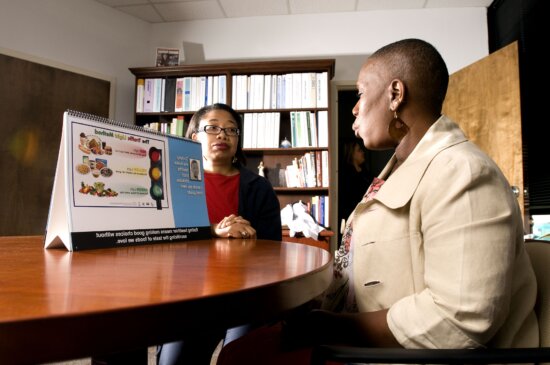
Community health workers (CHWs), including promotores, community health representatives (CHRs), and other health promoters, play a critical role in helping people in California’s underserved communities access care, manage chronic conditions, and navigate complex health and social systems.
California recognizes the value of CHWs and has established a Medi-Cal benefit that allows supervising providers to bill for CHW preventive services provided to enrolled members.
Training your California CHW team for Medi-Cal billing?
Our Core Competencies program covers all 11 competency areas required under California’s Medi-Cal Certificate Pathway, with certificates issued upon completion.
View the Core Competencies program →Are CHW Core Competencies Required In California?
California does not issue a state CHW license or certification. However, to bill for CHW services under Medi-Cal, CHWs must demonstrate minimum qualifications through one of two pathways: the Certificate Pathway or the Work Experience Pathway.
The supervising provider, not a state agency, is responsible for determining whether a CHW meets Medi-Cal qualification requirements. For a detailed overview of what audit-ready documentation looks like, see: What Happens If Your CHWs Aren’t Documented Correctly for Medi-Cal.
Medi-Cal Reimbursement for CHWs
To bill for CHW preventive services under Medi-Cal, supervising providers must ensure their CHWs meet the following minimum qualifications:
Lived Experience: CHWs must have lived experience that aligns with and provides a connection between the CHW and the community or population being served.
Plus one of the following:
- Work Experience Pathway: 2,000 hours working as a CHW in paid or volunteer positions within the previous three years, with demonstrated skills in core competency areas. CHWs using this pathway must earn a certificate of completion within 18 months of their first Medi-Cal CHW visit.
- Certificate Pathway: A certificate of completion from a program with a curriculum that clearly includes skills and practical training in the 11 core competency areas listed below. Certificate programs must also include field experience as a requirement. DHCS does not issue or approve CHW certificates. Any organization may issue a qualifying certificate, as determined by the supervising provider.
For additional practical guidance on building and sustaining CHW programs under Medi-Cal, the Center for Health Care Strategies and the California Health Care Foundation have published a curated resource center on CHW/P/R programs in California that includes tools and guidance specifically for Medi-Cal implementation.
CalAIM Funding Update, May 2026
California’s Section 1115 waiver renewal, submitted to CMS in May 2026, proposes to continue CalAIM programs including Enhanced Care Management and Community Supports for at least five more years, with $2.7 billion in proposed CalAIM spending for 2026-27. For organizations planning CHW workforce investments, this provides a clearer long-term funding signal for programs supported through Medi-Cal.
Need a certificate program that meets Medi-Cal requirements?
CHWTraining provides online Core Competencies training aligned to California’s certificate pathway requirements, with organizational enrollment and audit-ready completion records.
Talk to us about your program →CHW Core Competencies for California
California’s Medi-Cal Certificate Pathway requires training in the following core competency areas:
Communication. The ability to break down complex concepts, use active and empathetic listening, and identify and overcome communication barriers between patients and care providers.
Interpersonal and relationship building. Build rapport with clients, use motivational interviewing techniques, and work as part of a team.
Service coordination and navigation. Help clients access the care they need, including facilitating transportation, providing instructions, and explaining how the healthcare system works.
Capacity building. Help individuals advocate for themselves by developing their understanding of their needs and rights and identifying local resources.
Advocacy. Identify community needs and speak on behalf of clients with the appropriate agencies or providers.
Education and facilitation. Encourage clients to learn about their health risks and ways to prevent disease, and facilitate access to that information.
Individual and community assessment. Use formal assessment tools to determine the starting point for individuals and communities.
Outreach. Educate communities about available programs and services, and develop effective communication approaches for specific populations.
Professional skills and conduct. Effective management of time, resources, and priorities, along with adherence to ethical standards, confidentiality requirements, and institutional guidelines.
Evaluation and research. Use evidence-based practices, evaluate program outcomes, and identify root causes of health issues.
Knowledge base. Basic knowledge of public health principles and social determinants of health.
Continuing Training Requirement
All CHWs providing Medi-Cal billable services must complete a minimum of 6 hours of additional training annually in core competencies and/or specialty areas. Supervising providers must maintain documentation of continuing education requirements in case of audit.
Field Experience
Medi-Cal requires that certificate programs include field experience as a requirement. Field experience is documented and verified by the supervising provider, not the training program. Organizations typically meet this requirement through supervised work hours, prior CHW experience, or onboarding documentation.
More information is available from DHCS.
Ready to train your California CHWs?
Our Core Competencies training covers all 11 competency areas required under California’s Medi-Cal Certificate Pathway. Training is fully online and self-paced, with certificates of completion issued immediately upon successful completion.
Ready to get your CHW program Medi-Cal ready?
We work with California organizations to implement Core Competencies training that meets Medi-Cal certificate pathway requirements with consistent documentation at the organizational level.
Talk to us about your program →Originally published: August 2024 | Last updated: May 2026